1
X-ray and CBCT
Support common chiropractic DICOM workflows for image capture, storage, review, and access.
AmplifyPACS helps chiropractic offices store, view, share, back up, and review DICOM studies without unnecessary PACS complexity.
Support chiropractic imaging workflows, patient education, outside sharing, radiology review, PI documentation, and practice access.



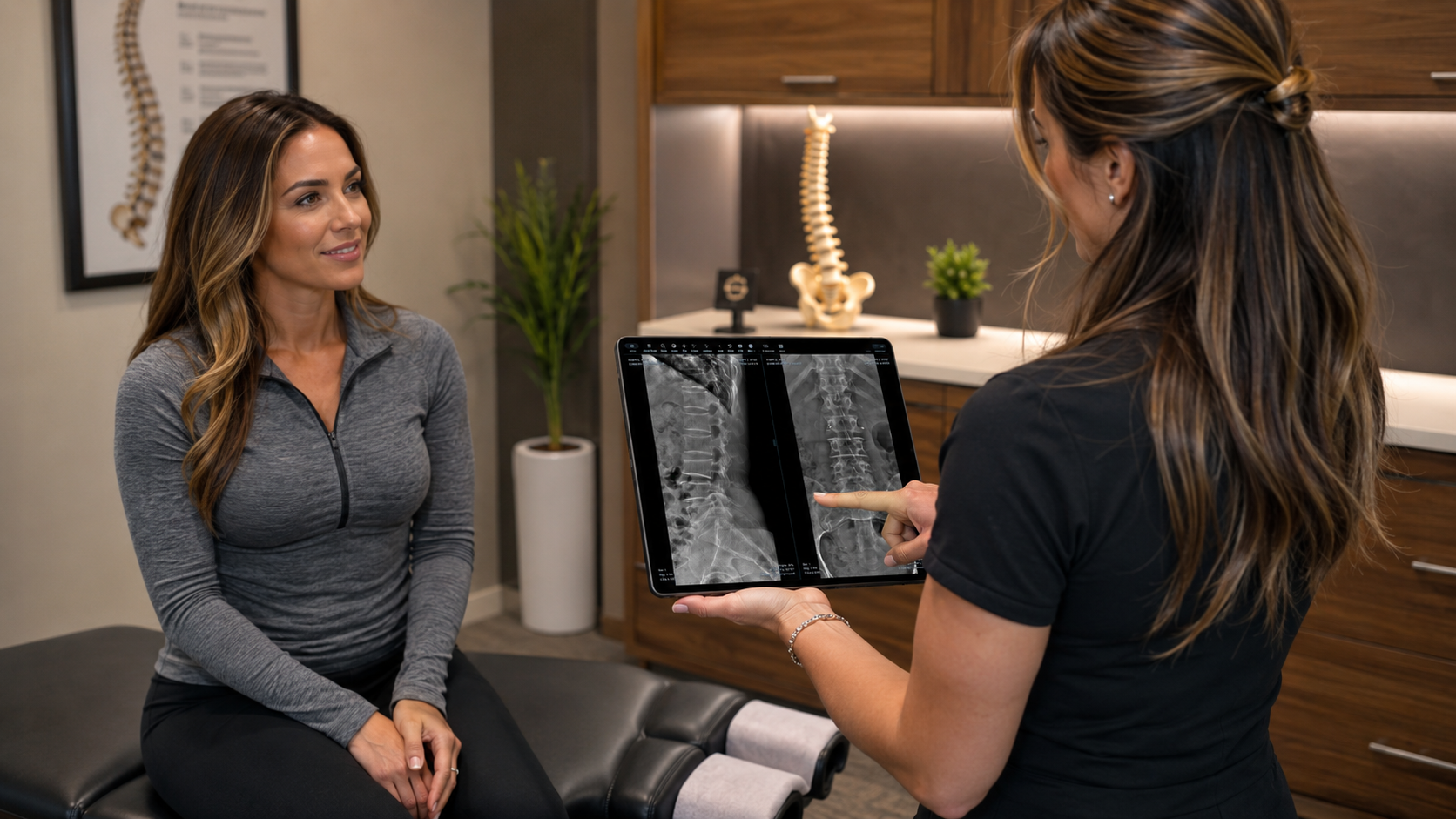

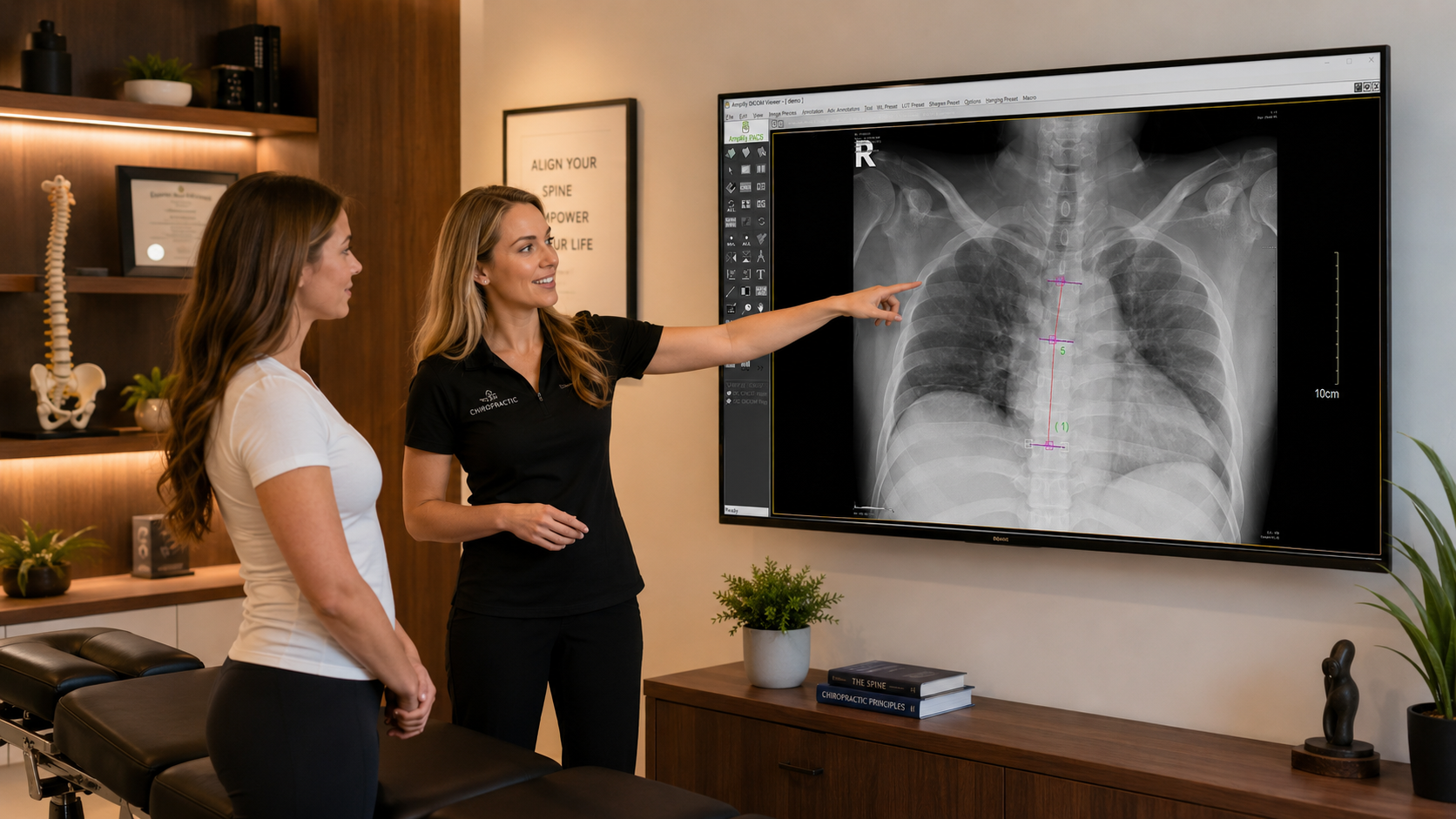
Support common chiropractic DICOM workflows for image capture, storage, review, and access.
Use chiropractic measurement and marking tools to support structured review and documentation.
Share studies with patients, outside providers, attorneys, insurance contacts, or radiology partners.
Give staff a simple remote-support path when they need help with upload, viewing, or workflow questions.
See how AmplifyPACS helps chiropractic offices review X-rays, perform measurements, label anatomy, annotate studies, and explain findings to patients.
The demo playlist walks through practical tools including Cobb angle measurements, spinal labeling, distance measurements, pelvic analysis, annotations, and image review workflows.
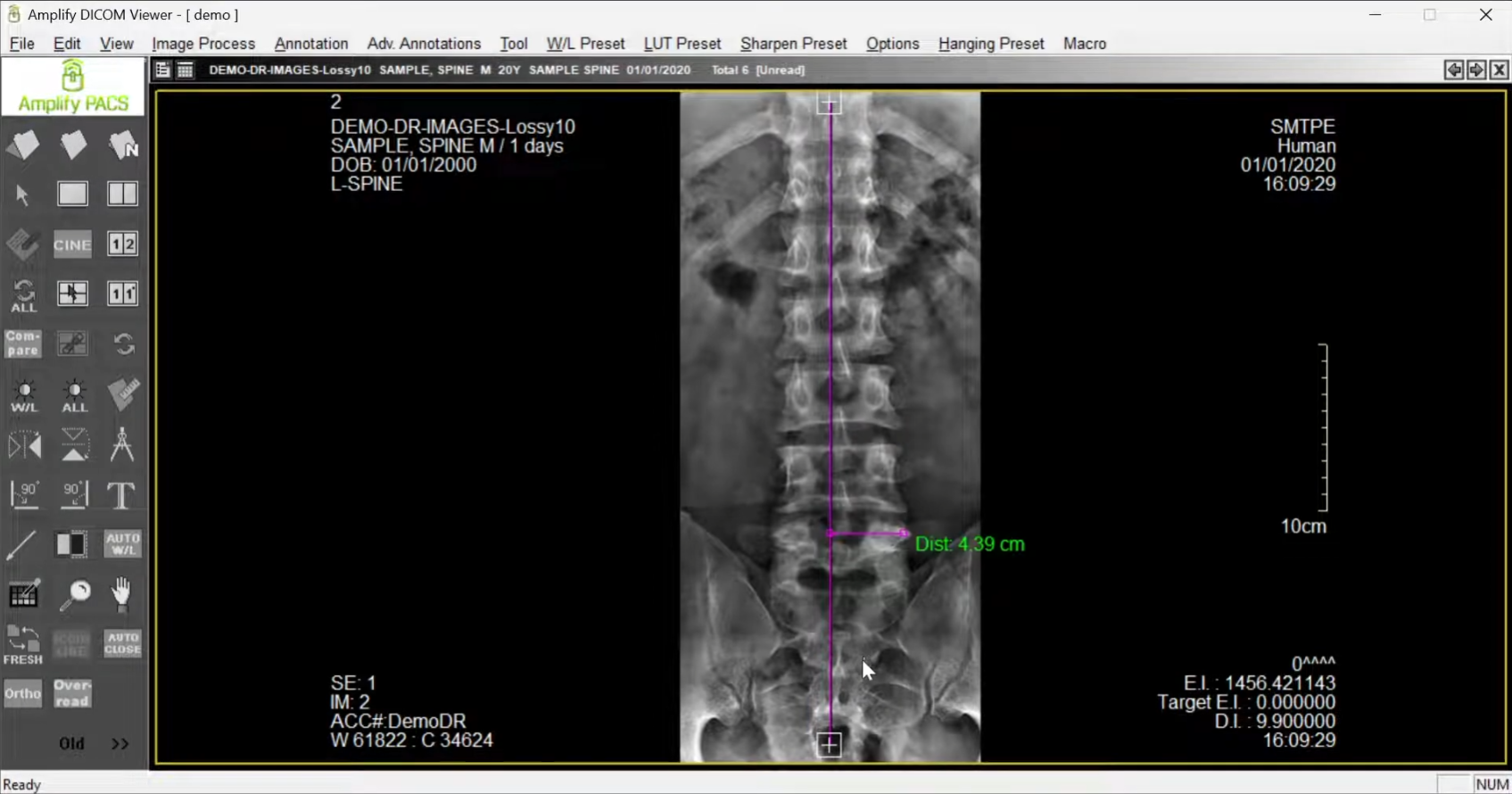
Cobb measurements, spinal labeling, pelvic analysis, annotations, and patient education workflows.
These tools assist with visual measurement and documentation workflows. Clinical interpretation remains the responsibility of the treating provider, radiologist, or qualified reviewer.
Measures the angle between two selected vertebral endplates or reference lines, commonly used to quantify spinal curvature.
Extends the Cobb-style measurement workflow with longer reference lines for clearer visualization across wider spinal segments.
Uses vertebral center points across a three-point workflow to assist with a center-based curvature measurement.
Uses a five-line center-based workflow to support a more detailed vertebral-center curvature assessment.
Assists with cervical curve evaluation by placing landmarks or reference lines along the cervical spine.
Draws an atlas-plane reference line to help evaluate upper cervical alignment relationships.
Measures deviation from a horizontal reference to help document deflection or tilt.
Calculates a rotation angle from selected reference points or lines to support rotational assessment.
Supports comparison of flexion and extension views for motion, stability, and alignment documentation.
Provides a posterior vertebral body alignment line commonly used on lateral cervical views to assess continuity and segmental relationships.
Creates projected reference rays from selected points to help visualize directional relationships and alignment.
Places line segments that can be compared as a ratio for proportional or relative measurement workflows.
Marks or estimates a center-of-mass point for alignment reference and comparative measurement.
Assists with comparing vertebral body and spinal canal dimensions as a ratio-based measurement.
Measures offset or deviation from a vertical reference line to document positional relationships.
Measures offset or deviation from a horizontal reference line to document height, level, or displacement.
Measures vertical separation between selected points, landmarks, or image features.
Measures horizontal separation between selected points, landmarks, or image features.
Measures a center-edge relationship, commonly used in pelvic or hip-oriented assessment workflows.
Supports comparative measurement of disc or vertebral body height to help document compression or narrowing.
Assists with documenting anterior or posterior vertebral translation relative to an adjacent segment.
Adds cervical spine labels to help identify levels and make images easier to review or present.
Adds thoracic spine labels for level identification and clearer communication.
Adds lumbar spine labels for level identification, review, and documentation.
Places a simple marker on an area of interest for reference, discussion, or follow-up review.
Provides a basic local spine-marking workflow for placing key reference points and labels.
Supports a Logan Basic style marking workflow for chiropractic pelvic and spinal analysis.
Provides a Gonstead-oriented pelvic analysis template for marking pelvic landmarks and relationships.
AmplifyPACS can support online image sharing, routing, reporting workflows, and remote support without forcing users into a complicated enterprise portal.

Share DICOM studies online without burning discs, shipping USB drives, or forcing recipients through a local workstation workflow.
Open DICOM.store
Connect with LaraRad reporting workflows for online radiology reads and streamlined image review.
Open LaraRad.comTell us what modalities, locations, users, viewers, and sharing requirements you need to support. We can help map the simplest deployment path.